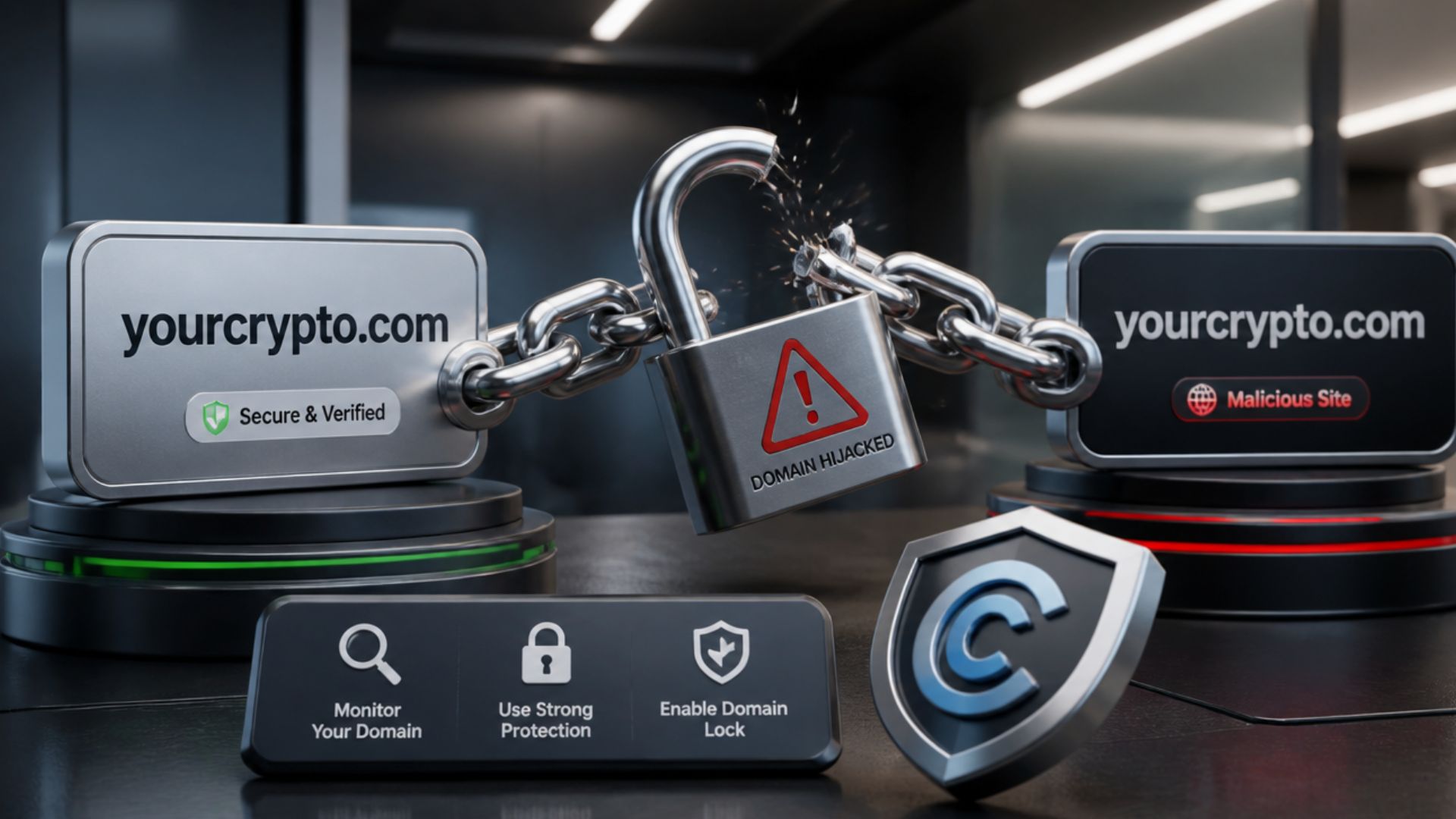
A crypto project can have secure smart contracts, protected wallets, and audited code, yet users can still be exposed if attackers gain control of the web infrastructure they trust. A compromised domain can send visitors to a convincing phishing site, where a familiar-looking interface may lead them to reveal credentials or approve malicious transactions. These attacks do not always target the blockchain itself. They often exploit the accounts, DNS systems, or people responsible for keeping a project’s web presence secure. Understanding where these weaknesses exist makes it easier to protect the project, its users, and its reputation.
What Is Crypto Domain Hijacking?
Crypto domain hijacking happens when someone gains unauthorized control over a web address used by a crypto project, business, or individual. The attacker may alter its DNS settings, redirect visitors, transfer ownership, or otherwise control where the address leads.
The exact risk depends on what type of name is involved. A traditional .com or .org relies on registrars and DNS infrastructure, while a blockchain name such as an ENS .eth name is controlled through blockchain-based ownership and wallet permissions.
That difference matters because the attack surface, prevention methods, and recovery options differ. Understanding which system controls the name is the first step in protecting it.
How Crypto Domain Hijacking Happens
Attackers usually target the systems and people that control a project’s online presence rather than the blockchain itself. A stolen credential, compromised registrar account, altered DNS record, or exposed wallet key can provide enough access to redirect users or take control of a name.
Phishing and Stolen Credentials
A convincing phishing message can trick an administrator into handing over credentials for a registrar, DNS provider, hosting platform, or email account. Reused or exposed passwords create another entry point. Once inside an administrative account, an attacker may change settings that redirect traffic or weaken other security controls.
Social Engineering and Registrar Compromise
Attackers may impersonate the legitimate owner when dealing with a registrar or service provider. A successful social-engineering attempt can lead to unauthorized account changes, ownership changes, or other actions that give the attacker control. The 2026 cow.fi incident shows why provider-side processes can become a critical security boundary for crypto projects.
Unauthorized Domain Transfers and Account Takeover
If an attacker gains access to a registrar account or obtains the credentials needed for a transfer, they may attempt to move the registration to another provider. Account takeover can also give them control without transferring the name. Registrar and registry locks can make unauthorized changes harder to execute.
DNS and Nameserver Compromise
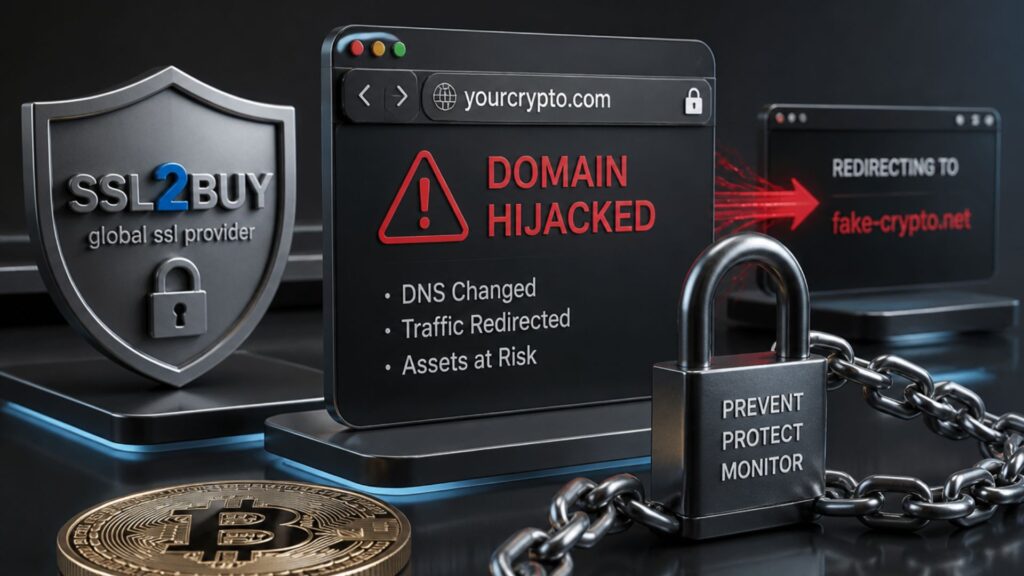
An attacker does not always need to transfer ownership. If they gain control of the DNS account or nameservers, they can change where the address resolves. Visitors may still see the familiar URL in their browser while being sent to attacker-controlled infrastructure.
Compromised Hosting and Frontend Infrastructure
Attackers can also target the web server or application behind a legitimate address. An attacker who compromises hosting credentials, deployment systems, or a service account may replace or alter the frontend without changing the registration. The 2026 Compound incident illustrates this related risk: its website was modified after a cloud service-account compromise, creating a phishing threat even though the incident was not a registrar-level takeover.
Compromised Wallets Controlling Blockchain Domains
Blockchain-based names have a different control model. For an ENS name, the wallet holding the Owner role controls ownership. If an attacker compromises that wallet, they may be able to transfer the name or change its control. ENS recommends separating the Owner role from everyday wallet activity to reduce the chance that a compromised hot wallet can also surrender a valuable name.
What Happens After a Crypto Domain Is Hijacked?
Once attackers gain control, the familiar web address can become a tool for targeting users. They can use the project’s existing reputation and branding to make malicious activity appear legitimate.
- Redirect visitors to phishing sites: Users can be sent to a convincing copy of the legitimate website while the familiar address remains visible in their browser.
- Steal credentials or wallet information: A fake interface may ask users for passwords, recovery phrases, private keys, or other sensitive information.
- Trick users into signing malicious transactions: An attacker-controlled frontend can present fraudulent transactions or approvals that users may unknowingly authorize through their wallets.
- Redirect crypto payments: A compromised site can replace payment addresses with attacker-controlled ones, causing users to send funds to the wrong recipient.
- Damage trust and reputation: Even after access is restored, users may hesitate to interact with the project, particularly if the incident results in stolen funds or prolonged exposure to a phishing site.
How to Prevent Crypto Domain Hijacking
Prevention starts with protecting every account and system that can change where a trusted address leads. For traditional domains, that means securing the registrar, DNS provider, email, and transfer controls. For blockchain names, it also means protecting the wallet and permissions that determine ownership.
Secure the Registrar Account
Use a unique, strong password and enable multi-factor authentication on the registrar account. Limit administrative access to people who actually need it, and remove unused accounts promptly. Treat the registrar account as a critical security asset, not just another service login.
Use Domain and Registry Locks
Enable the strongest locking options the registrar and registry provide. A registrar lock can help prevent unauthorized transfers or certain account changes, while a registry lock adds another layer for high-value names. These controls are particularly useful for project addresses that users rely on to access applications or services.
Protect DNS and Nameserver Access
Restrict who can modify DNS records and nameserver settings. Use strong authentication, limit administrative permissions, and monitor changes to important records. DNSSEC can also help authenticate DNS responses, but it does not protect against a compromised registrar or DNS account on its own.
Enable DNSSEC Where Appropriate
DNSSEC adds cryptographic validation to DNS responses, helping users receive authentic DNS data instead of forged responses. It should complement, not replace, account security, transfer locks, and access controls.
Separate Critical Ownership From Daily Access
Avoid giving an everyday wallet more authority than it needs. For ENS names, ENS recommends keeping the Owner role in a more secure wallet while using a separate wallet for routine management. This limits the damage if a hot wallet is compromised.
Protect the Email and Accounts Behind Domain Administration
A registrar or DNS account is only as secure as its recovery channels. Protect the email account associated with administrative access with strong authentication and unique credentials. Review recovery methods regularly and remove outdated addresses, phone numbers, or accounts.
Monitor Domain, DNS, and Certificate Changes
Set up alerts or regular checks for unexpected changes to registration details, nameservers, DNS records, certificates, and administrative access. Early detection can significantly reduce the time an attacker has to redirect visitors or expose them to malicious content.
Verify Wallet Transactions Before Signing
A compromised website can present a transaction that looks legitimate while requesting a dangerous approval or transfer. Users and administrators should review the destination, permissions, amounts, and other transaction details before signing. Never approve a request simply because it appears on a familiar website.
Traditional Domain vs. Blockchain Domain Hijacking
The biggest difference is where control resides. A traditional web address is managed through a registrar and DNS infrastructure, while a blockchain name such as an ENS .eth name is controlled through blockchain permissions and the wallet holding the relevant ownership role.
| Factor | Traditional domain | Blockchain domain |
| Primary control | Registrar and DNS infrastructure | Blockchain wallet and ownership permissions |
| Common target | Registrar account, DNS provider, email, or transfer process | Wallet, private key, or transaction-signing authority |
| Typical compromise | Unauthorized account or DNS changes | Wallet compromise or malicious transaction approval |
| Main protections | MFA, registrar locks, registry locks, DNS security | Secure key management, wallet separation, role-based permissions |
| Recovery | Registrar or registry processes may help reverse unauthorized changes | Recovery can be difficult or impossible if ownership has been transferred |
This distinction affects how a project should protect its online identity. Securing a registrar account will not protect an ENS Owner wallet, just as securing a blockchain wallet will not prevent someone from taking over a project’s DNS provider. Each control layer needs its own security measures.
What to Do If Your Crypto Domain Is Hijacked?
The response depends on what was compromised. Move quickly, because every additional minute can expose more users or give an attacker time to make further changes.
If a traditional domain is compromised:
- Contact the registrar immediately: Report the unauthorized changes and ask what emergency measures are available to lock or restore the account.
- Secure the registrar and email accounts: Change compromised passwords, revoke unauthorized sessions, and strengthen authentication.
- Review DNS and nameserver changes: Identify what was modified, and restore legitimate records only after confirming the controlling accounts are secure.
- Check related infrastructure: Review hosting, CDN, deployment systems, certificates, and other services that could have been affected.
- Preserve evidence: Keep relevant logs, account notifications, DNS records, timestamps, and other information that can help with investigation and recovery.
- Warn users through verified channels: If visitors may have encountered a malicious site, publish a clear warning through an unaffected official communication channel.
If an ENS domain is compromised:
- Stop signing transactions from the compromised wallet: Don’t assume a familiar-looking recovery or security prompt is safe.
- Determine whether the attacker controls the Owner role: This determines what recovery options remain.
- Use a clean wallet for recovery: If you can still transfer the Owner role safely, move it to a wallet that hasn’t been exposed.
- Review wallet activity and approvals: Check for unauthorized transfers, token approvals, and other permissions that could put remaining assets at risk.
- Secure the name after recovery: Separate high-value ownership from routine wallet activity where appropriate.
- Warn affected users: If the name was used to direct people to a compromised service, communicate the incident through trusted channels.
ENS notes that it cannot forcibly transfer a stolen name back to its previous owner, so acting quickly while the legitimate Owner still has control can be critical.
Conclusion
A crypto project’s security does not stop at its smart contracts or wallets. The web address users trust can become an attack path if the registrar, DNS infrastructure, hosting systems, or controlling wallet is poorly protected.
The best defense is to secure each layer that can influence where users are sent or what they are asked to sign. Strong authentication, access controls, monitoring, transfer protections, and secure wallet management can significantly reduce the risk. Just as importantly, having a response plan helps limit the damage if something does go wrong.